In this article
German critics pick top board games, instantly sparking massive sales.
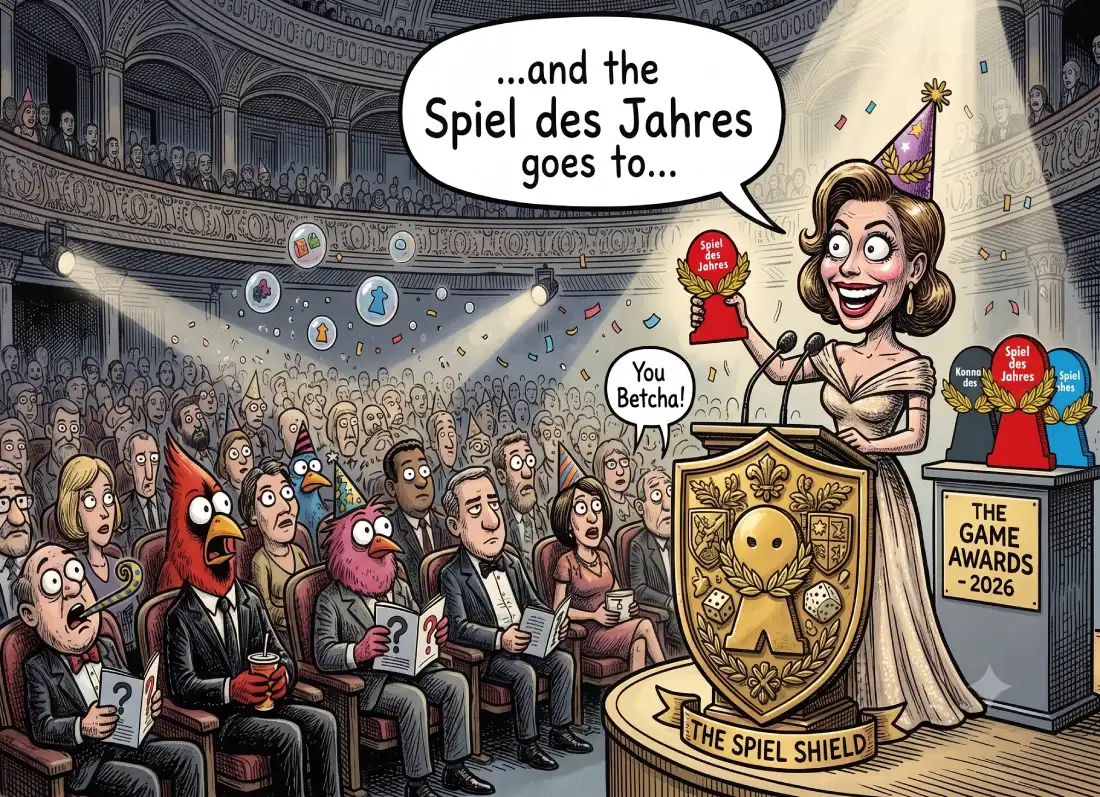
Every July, a handful of German board game critics get together and announce a winner. And somewhere, a small publisher’s print run quietly triples overnight. That’s Spiel des Jahres in one sentence.
But the actual mechanics behind it are stranger, and honestly more interesting, than “board game Oscar,” which is the lazy comparison most outlets reach for when they don’t want to explain it properly.
The Short Answer
Spiel des Jahres is German for “game of the year.” It’s an annual award, founded back in 1978 by a small panel of board game critics and journalists in Germany. Here’s what it isn’t, though: it’s not a sales award, it’s not a public vote, and no publisher is buying their way onto that stage. A jury plays through hundreds of new releases every single year and picks one winner they think best represents what a great board game should be. No entry fee. No submission process a publisher can grease. Games get sent in, the jury plays them, and most of them just… lose.
Why It Isn’t a Popularity Contest
The jury’s stated criteria sound almost boring on paper: rules you can teach in a few minutes, a box that doesn’t lie about what’s inside, components that hold up to actual use, and a game that stays fun on repeat plays with people who aren’t hobbyists. That last part is the whole ballgame, honestly. Think about it this way: Spiel des Jahres has never been chasing the game with the deepest strategy or the most ambitious rulebook. It’s chasing the game a family can crack open on a Tuesday night without anyone needing to read sixteen pages first.
That’s earned the award a reputation among hardcore hobbyists as a bit soft, rewarding “gateway” games over anything with real teeth. And look, that reputation is mostly deserved. But it’s also kind of the entire point. The jury isn’t trying to crown the best game in the hobby. It’s trying to crown the best game to hand a total stranger.
Three Awards, Not One
Most people who’ve only half followed this know the big one. But there are actually three separate prizes handed out the same night, each judging a different weight class.
| Award | Started | What It Rewards |
|---|---|---|
| Spiel des Jahres | 1978 | Family-weight games, easy to teach, broad appeal |
| Kennerspiel des Jahres | 2011 | Heavier “connoisseur” games with more strategic depth |
| Kinderspiel des Jahres | 2001 | Games built specifically for children |
Kennerspiel got added because the jury kept running into excellent games that were just too complex to hand a non-gamer, and they wanted a way to recognize those without watering down what the main award stands for. Kinderspiel exists for the same reason at the other end. Games built around a six-year-old’s attention span, not an adult’s.
What Wins, and What Doesn’t
Look at the winners list across five decades and a pattern falls out fast. The award loves games that make an unlikely group of people feel briefly like they’re good at something together. Here’s what I mean: Catan, which took the prize in 1995 back when it was still called Die Siedler von Catan, is maybe the clearest example of what a win can do to a game’s trajectory. It went from a clever German trading game to a fixture in living rooms that had never bought a board game before. Dixit won in 2010 on the strength of being playable by people who’d swear up and down they’re bad at “creative” games. And Sky Team, the two-player cooperative flight-deck game I’ve reviewed and rated a 4.8 out of 5, took the win in 2024. Part of a run of cooperative titles the jury favored three years running, before this year’s ceremony finally broke the streak with a party game instead.
None of these are the most mechanically interesting games on a shelf full of hobbyist darlings. That’s not a knock, to be clear. It’s just a different job than the one a Kickstarter darling with forty custom miniatures is trying to do.
Why Winning Actually Matters
This is where the award stops being trivia and starts being commercially real. A Spiel des Jahres win can multiply a game’s sales tenfold or more in the months after the ceremony, largely because German retail treats the winner as the default gift recommendation heading into Christmas… which is the biggest sales window in the entire hobby. Toy stores that never stock hobbyist board games will carry the winner. That’s a kind of mainstream retail placement most publishers simply can’t buy, and it’s a big reason why every publisher in Germany is quietly hoping their game gets noticed by five people most of the public has never heard of.
I’m not going to pretend the award doesn’t have blind spots, either, because it does, and they’re worth naming instead of politely skipping over. It’s historically rewarded a fairly narrow, Eurocentric idea of what a “family game” looks like.
And the pool of designers it draws from has been overwhelmingly male for as long as anyone’s been tracking it. Neither fact makes the award meaningless. It just means it’s judging a specific, narrower question than “what’s the best game,” and that’s worth knowing before you treat the winner’s sticker on a box as gospel.