What actually works for younger players
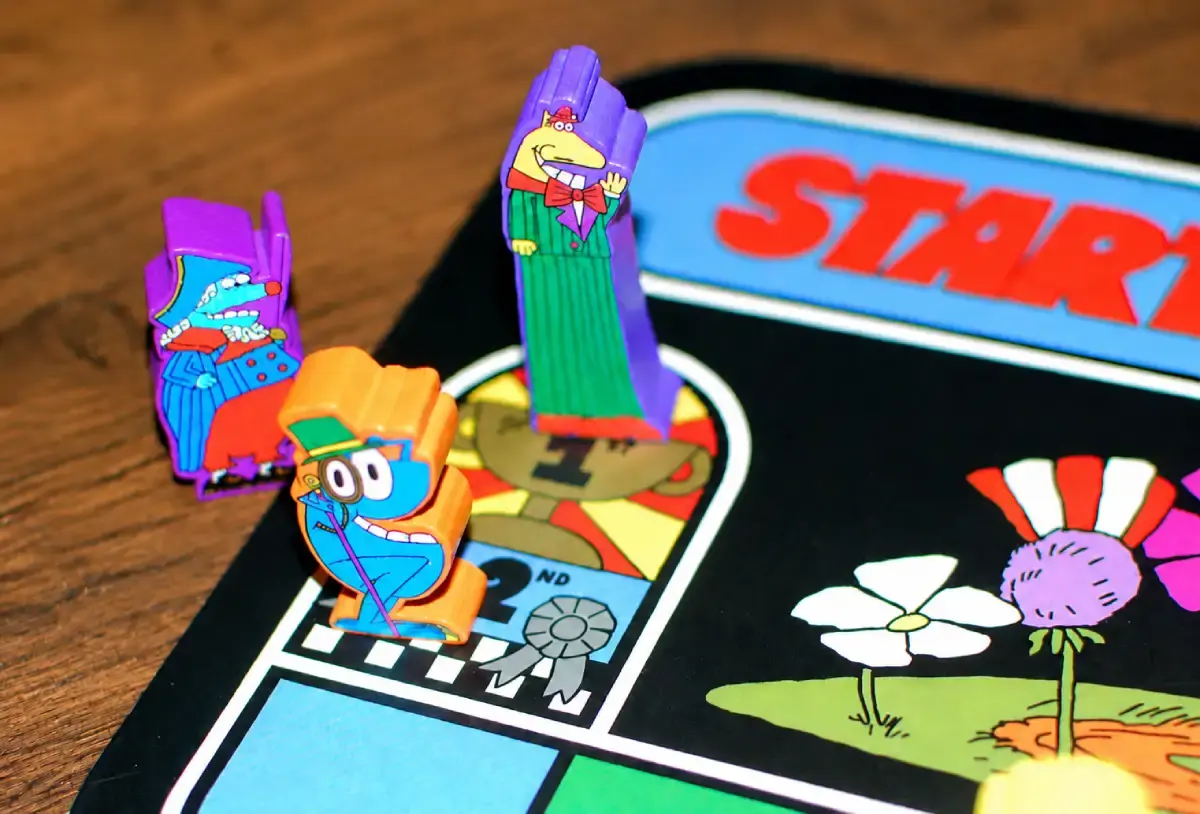
The games that land best with kids tend to share one quality: the rules are simple enough to explain in a single sitting, but something unexpected can always happen. Magical Athlete is a good example of that balance. It's a racing game at its core, which any six-year-old understands immediately, but every racer has an ability that can scramble the whole field in a single turn. The kid who's been losing for three laps can teleport to the front. The leader can get knocked back without warning. That volatility isn't a problem for younger players; it's exactly what keeps them leaning in. It also means the age gap that usually makes mixed games awkward largely disappears. A six-year-old racing against a ten-year-old or an adult isn't at a disadvantage in any meaningful way. The chaos equalizes things in a way that careful design can't always manufacture deliberately.The age bracket question
One thing parents search for more specifically than most game sites acknowledge is age-appropriate fit. Board games for 5 year olds need a different design than board games for 6 year olds, and both are a different category from games that work at eight or ten. The gap between a five-year-old and a seven-year-old is bigger cognitively than the gap between a twenty-five-year-old and a thirty-year-old, and games that ignore that tend to frustrate at both ends. For the youngest players, the key is tactile engagement and immediate feedback. Abstract strategy is out. Physical components that do something satisfying, clear cause and effect, and rounds that end before attention does. Board games for toddlers are essentially a different product category entirely, built around the handling of pieces rather than any real decision-making. Expecting a three-year-old to track a resource economy is a fast way to end the session in tears. As kids move into the five to eight range, simple decision trees start to work. Not deep strategy, but genuine choices with readable consequences. That's the sweet spot for fun board games for kids that don't condescend, and it's where the best kids board games tend to live. A child in that age range can understand that one option is riskier than another, can read the board state at a basic level, and can handle losing without it derailing the whole evening, most of the time.Educational doesn't have to mean boring
Educational board games for kids get a bad reputation because most of them lead with the educational angle and treat the game part as a delivery mechanism. The ones that actually work do it the other way around: the game is good, and learning happens as a byproduct of playing it. Magical Athlete teaches probability and turn-order strategy without ever announcing that it's doing so. Kids figure out over multiple plays that certain racers perform better at certain points in the race. That's pattern recognition earned through play, not worksheets. The best children's board games in this space don't wear their intentions on the box. They're just good games that happen to build something along the way.Building from here
Kids who grow up playing good games tend to want more of them. The natural next step for a group that enjoys the chaos of a kids game but wants something with a bit more noise and energy is the party games category, which scales to larger groups and tends to reward the same instinct for unpredictability. For kids who've started wanting real strategic decisions rather than luck-driven outcomes, the strategy games category is where that itch gets properly scratched. What to look for in a kids board game:- Rules that can be explained to a six-year-old in under five minutes
- Enough unpredictability that no result feels inevitable
- Play time under 45 minutes before attention runs out
- Components that survive enthusiastic handling
- Fun on replay, not just the first time