In this article
- Villainous Makes You Root for the Wrong Side
- Six Universal Monsters, One Clock, No Room for Error
- The Thing Doesn’t Care If You Trust Your Friends
- Your Phone Is the Real Villain in Scream
- Nobody’s Bluffing in Campy Creatures. That’s the Problem.
- The Difference Between Horror Board Games and Halloween Decorations
Five horror games worth your Halloween table that your friends will like to play.
Every October the same six party games get a pumpkin sticker slapped on the box and get passed off as a horror list. None of that here.
These five earned their spot because something about how they play changes once everyone at the table stops trusting each other: hidden identities, real-time panic, or the plain discomfort of being handed a villain’s win condition and realizing you kind of want it. Some of these you can walk into cold. One of them will make you check your friend’s mouth for dental work.
| Game | Players | Playtime | Best For |
|---|---|---|---|
| Villainous | 2-6 | 50-60 min | Competitive tables who want separate plots, not a shared board |
| Horrified: Universal Monsters | 1-5 | ~60 min | Co-op groups who like triage under a shrinking clock |
| The Thing – The Boardgame | 1-8 | 60-120 min | Hidden-role nights built on real paranoia |
| Scream: The Game | 3-8 | 20 min | Full six-plus tables who want fast, app-driven panic |
| Campy Creatures | 2-5 | 20-30 min | A quick, mean bluffing round between bigger games |
Villainous Makes You Root for the Wrong Side
Villainous doesn’t work like most competitive board games, and that’s the entire point. Every player picks a different Disney villain with a private board, a private deck, and a win condition that has nothing to do with anyone else’s. Ursula needs to collect a set of ingredients and cast one specific spell. Jafar needs to control certain locations while holding the lamp. You’re not racing for shared resources so much as running separate plots that crash into each other when a Hero shows up uninvited.
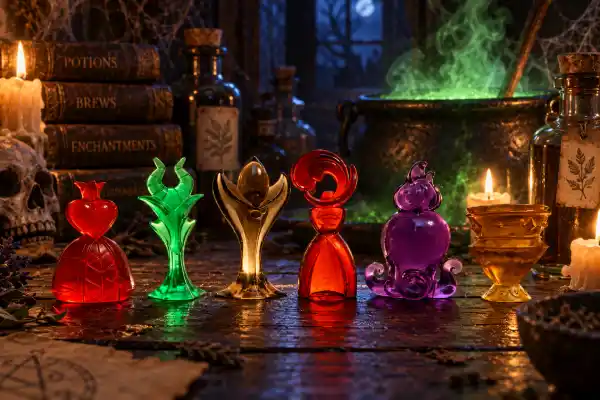
Villainous earns its spot here over a generic villain-themed game because it commits to each character’s own story logic instead of reskinning the same mechanics five times.
Playing Maleficent doesn’t feel like playing Hades wearing a different coat of paint. The first game will be messy while everyone learns their own deck in isolation. The second game is where it clicks, when players stop just playing their own hand and start plotting against the table.
Six Universal Monsters, One Clock, No Room for Error
Horrified: Universal Monsters throws Dracula, the Invisible Man, the Mummy, the Bride of Frankenstein, the Wolf Man, and Frankenstein’s Monster onto one board and hands you a shrinking amount of time to deal with all of them before the Terror Track runs out. That shrinking clock, not the theme, is where the dread comes from.
Every monster has its own defeat condition and its own way of making your life worse, so the group has to triage in real time: chase the Invisible Man’s item combo, or drop everything because Dracula just flipped his coffin and started closing in on a villager.
The cooperative pressure works because the game refuses to let you solve one monster at a time in a vacuum.
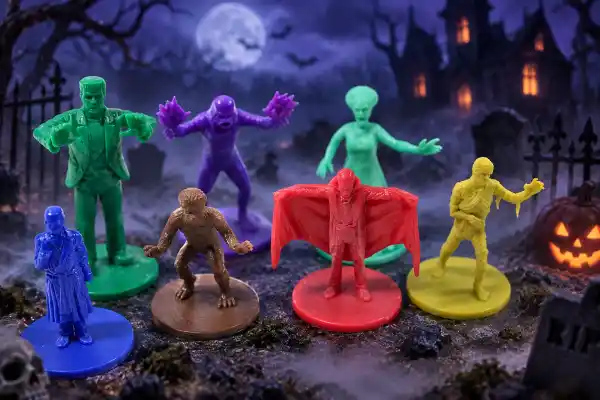
Horrified: Universal Monsters forces the whole table into constant renegotiation about what gets sacrificed to save something else, and that argument, not the fog-and-pumpkin aesthetic, is what makes it feel like the back half of a real monster movie, not a board game about one. It scales from one player to five without falling apart, which is rare for anything this chaotic.
The Thing Doesn’t Care If You Trust Your Friends
The Thing – The Boardgame is built entirely around not knowing who’s still human, and the newer Thule Station expansion adds a genuinely uncomfortable new way to almost find out. Instead of the old wire-and-flamethrower blood test, Thule Station gives you flashlights and dental fillings: the Thing can copy a person down to their voice and memories, but it can’t fake metal in someone’s teeth.
So you can check a person’s mouth and confirm they’re human. You can never confirm they’re not, which is exactly the kind of asymmetry that keeps a hidden-role game honest instead of solvable.
Thule Station also leans into the fact that it’s set at the Norwegian station where the story starts, before Outpost 31 ever gets involved, and it lets a game end with the sled dog escaping into the snow, which then infects your next base-game session with a dog that behaves like it’s already been changed.
There’s a new endgame location too, a UFO that gives a cornered Thing one last shot at getting off the ice, plus rules letting a paranoid human sabotage the team’s escape and try to survive alone. It’s meaner than the base game, and it knows it.
Your Phone Is the Real Villain in Scream
Scream: The Game hands the killer’s job to an app, and that’s what makes it worth the table time. You and everyone else work through a deck of Scene cards, drawing, trading, or completing objectives with the Scream cards in your hand, while Ghostface calls in through the app on his own schedule to mess with you.
He can force everyone to check their hand for his cards and dump it if you’re holding three, threaten a location and demand a specific item, or single someone out with a direct stalk that ends the game if they can’t produce what he’s asking for.
The part that works is how it turns hand management into a countdown. You can only draw on your turn, you can only trade one card at a time, and the app never stops the clock to let you catch up, so a six-player game means passing the knife around a full loop before you’ve built up anything useful.
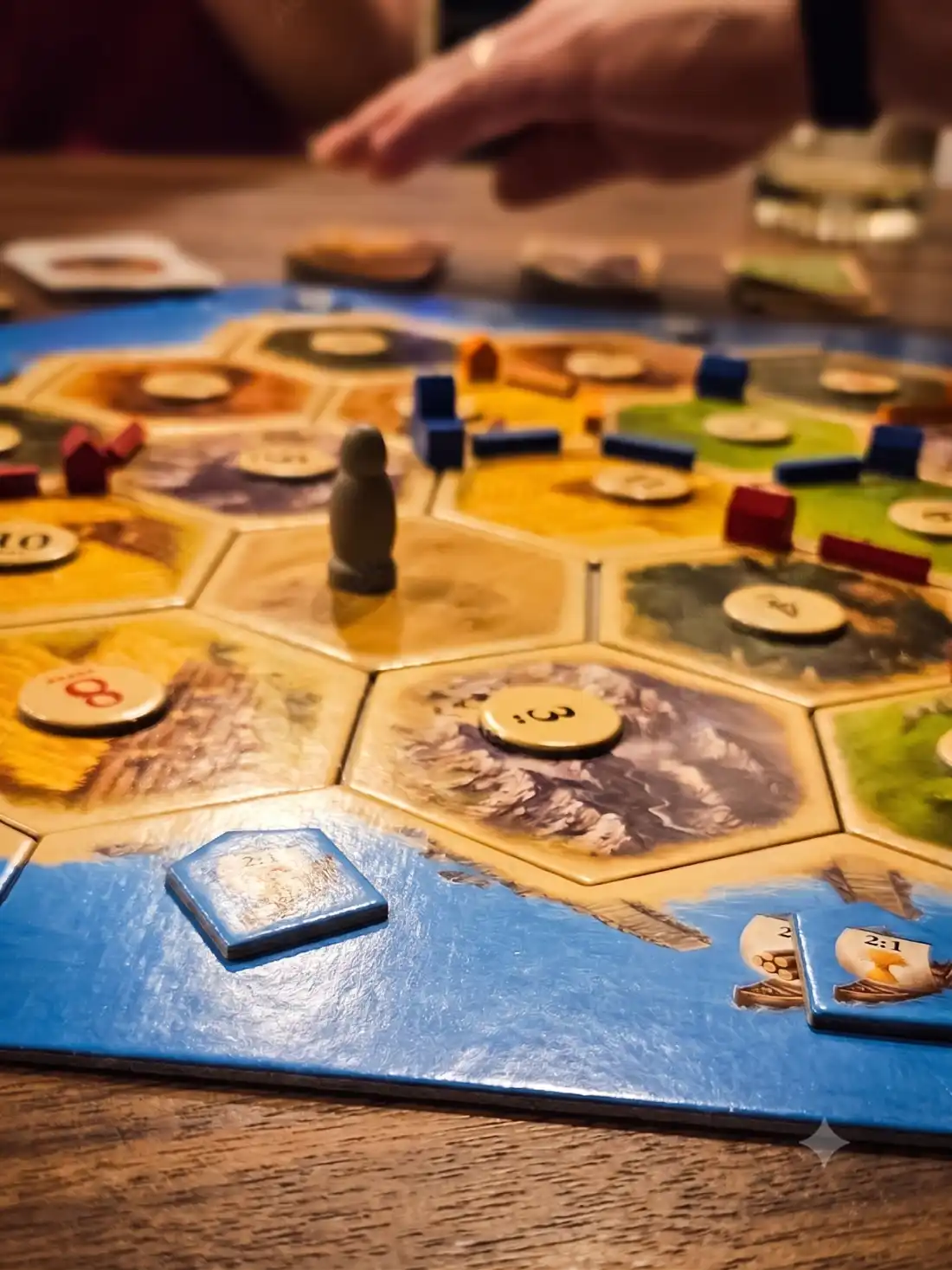
Catan’s robber applies that same kind of pressure; here it’s aimed at you personally, and it’s running on a clock. It plays cleanest with a full table. At three or four players it loses a lot of its bite.
Nobody’s Bluffing in Campy Creatures. That’s the Problem.
Campy Creatures starts everyone with the exact same hand of creatures, which sounds like it should kill any deduction game dead before it begins. It does the opposite. You’re a mad scientist trying to capture the most valuable mortals over three rounds, and since every player holds an identical set of monsters, there’s no card advantage to chase and no rare combo to draw into.
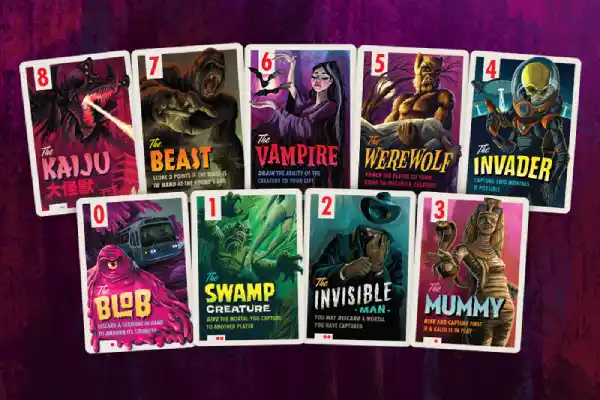
The entire game is reading what your opponents are about to do with the same options you have, and picking the creature that beats their guess instead of yours.
Most bluffing games run on the fun of not knowing what’s in someone’s hand. Campy Creatures runs on the opposite: you know exactly what everyone could play, which turns every round into a small, mean psychology experiment instead of a card gamble. It’s the lightest weight on this list and plays fast, but the mind games get sharper the more people you seat at the table.
The Difference Between Horror Board Games and Halloween Decorations
None of the five games above are tense because of black card stock or a pumpkin on the box. The dread, or the outright discomfort, comes from something about the system itself working against you: an app that won’t wait for you, a monster’s ability nobody warned you about, a friend across the table who’s supposed to be human and might not be.
That’s the test worth applying to any list of horror board games instead of a list of games you happen to play near Halloween decorations.
If you’re building a table for the holiday and only have room for one pick, go cooperative with Horrified if your group likes working together under pressure, or go for The Thing if you want people quietly side-eyeing each other for the rest of the night.
Scream earns its spot with a full table of six, not a cozy foursome. Villainous and Campy Creatures both work year-round, which says something about how little they lean on the season to be worth playing.
Halloween board games get treated like a genre of decoration. The good ones are just good games that happen to land at the right time of year.