In this article
- Splendor Is the Clearest Lesson in Compounding
- Azul Teaches You to Hurt People Politely
- Greed Has a Price in Ticket to Ride
- Carcassonne and the Meeple Budget
- Kingdomino Puts a Price on Going First
- Cascadia Rewards Plans That Bend
- Three Ways to Lose in 7 Wonders Duel
- Lost Ruins of Arnak, the Bridge to Heavier Games
- Habits That Help You Win Your First Few Games
- Where to Go After These Eight
- Which Beginner Strategy Game Should You Start With?
Eight gateway games, each teaching one real skill.
Most beginner lists pick games because they’re easy. That’s half the job. A good first strategy game should also teach you something you’ll use in every heavier game afterwards: how to build an engine, how to deny your opponent, how to know when to stop being greedy.
So every game below comes with the one skill it drills into you. Learn all eight lessons and nothing on a heavier shelf will feel foreign. Each one takes under 15 minutes to teach, and all but Arnak play in under an hour. Five of them (Carcassonne, Ticket to Ride, Kingdomino, Azul and Cascadia) won the Spiel des Jahres, the award that has quietly shaped what “beginner-friendly” means for decades.
| Game | The skill it teaches | Players | Play time |
|---|---|---|---|
| Splendor | Building an engine | 2-4 | 30 min |
| Azul | Denying your opponents | 2-4 | 30-45 min |
| Ticket to Ride | Weighing risk against reward | 2-5 | 45-60 min |
| Carcassonne | Managing limited pieces | 2-5 | 35-45 min |
| Kingdomino | Trading now for later | 2-4 | 15-20 min |
| Cascadia | Planning around scoring goals | 1-4 | 30-45 min |
| 7 Wonders Duel | Watching several win conditions | 2 | 30 min |
| Lost Ruins of Arnak | Juggling several systems at once | 1-4 | 60-120 min |
Splendor Is the Clearest Lesson in Compounding
You’re a Renaissance gem merchant. On your turn you take gem tokens, reserve a card, or buy a card. First to 15 prestige points ends the round.
Every card you buy gives you a permanent gem discount on future purchases, so cards that cost seven tokens early on cost two or three later.
That’s an engine in its purest form. The first ten minutes feel slow and a little pointless, then suddenly you’re buying a card every turn. The lesson here is when to stop investing and start scoring, and every new player gets it wrong at least once.
Reserving is the sneaky part. Reserving a card hides it in your hand and gives you a gold wildcard, which means you can snatch the card your opponent was clearly saving up for. The first time someone does that to you, you’ll understand why people call Splendor deceptively mean.
Azul Teaches You to Hurt People Politely
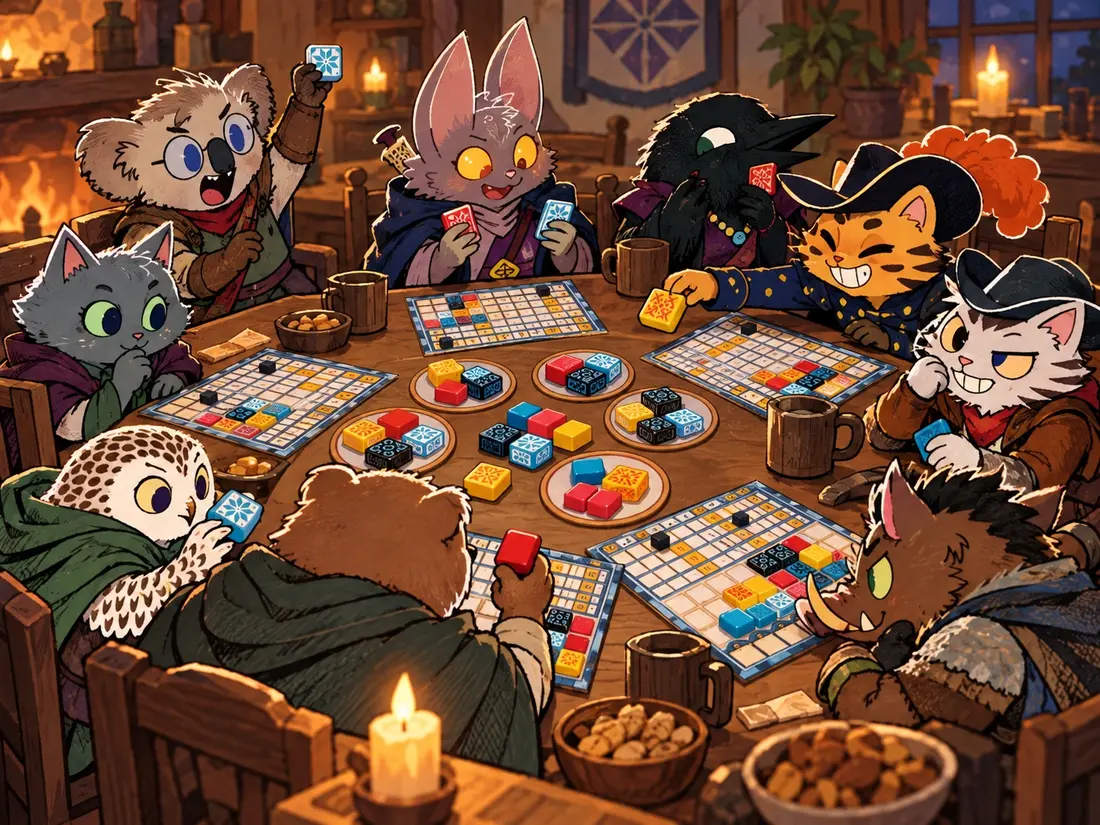
Azul looks like a tile-matching puzzle. Players take tiles from shared displays to fill rows on their own boards. The catch: you must take every tile of one color from a display, and anything you can’t place falls onto your floor line for minus points.
Once that sinks in, Azul becomes a different game. You start taking tiles you don’t need so nobody else gets them. You leave five red tiles sitting in the center because you know the next player has nowhere to put them. That’s hate drafting, a skill that shows up in nearly every drafting game you’ll ever play. Grabbing first from the center pile costs you a point but makes you first player next round, a small decision that’s really a lesson in tempo.
Greed Has a Price in Ticket to Ride
You collect colored train cards and spend them to claim railway routes between cities. Secret destination tickets score big if you connect their two cities by game end, and cost the same amount if you don’t.
That’s the lesson: every ticket is a bet. Take three extra tickets late in the game and you might win outright or sink yourself. Newer players hoard cards forever. Better ones claim a key route early, because the other player might need it too, a quiet introduction to blocking that’s sharpest with three to five players. At two, the map opens up and nobody gets boxed in.
Carcassonne and the Meeple Budget
You draw a landscape tile, add it to the growing map, and can place one of your seven followers on a road, city or monastery. When that feature is finished, you score it and get your follower back.
Seven followers sounds like plenty. It isn’t. Park too many on sprawling cities that never close and you’ll spend the last third of the game with nothing to place. Carcassonne teaches you that your pieces are a resource, not decoration.
It also teaches you to steal. Two players’ followers can end up on the same city if you connect them, and whoever has more takes all the points. Sliding a tile in to join a city your opponent thought was safe is Carcassonne’s great small cruelty. Farmers, scored at the end, are the advanced layer. Teach them in the second game, not the first.
Kingdomino Puts a Price on Going First
A 15-minute game where you build a five-by-five kingdom from domino-style tiles, scoring each connected terrain area’s size multiplied by the crowns in it. The tile draft is the brilliant bit: dominoes are numbered, and the better the tile you take this round, the later you pick next round. Every choice is a trade between now and later, and plenty of heavy games are built on that same tension. Kingdomino just makes it obvious within one play.
Cascadia Rewards Plans That Bend
Each turn you take a habitat tile and a wildlife token as a pair, and add both to your personal landscape. Scoring cards change every game: one set rewards bears in pairs, another wants long lines of salmon, another pays for hawks that are kept apart.
The skill is planning around goals you can’t fully control. The pair you want is rarely on offer, so you learn to keep two or three plans alive at once and pivot without panicking. Nature tokens let you break the pairing rule, and choosing when to spend them is Cascadia’s quiet decision point.
Nobody attacks anybody, so it’s a good fit for groups who dislike direct conflict but still want to think. More picks in that spirit sit in the family games category.
Three Ways to Lose in 7 Wonders Duel
This one’s two-player only. Cards are laid out in a pyramid, some face down, and you take them in turns, which often reveals a new card for your opponent. You’re always asking what your pick opens up for them.
It also has three ways to win: military, science, or points. Your opponent can end the game suddenly if you ignore the first two, so you learn to check every threat each turn, not just your own plan. That habit transfers directly to games like Twilight Struggle later on.
Lost Ruins of Arnak, the Bridge to Heavier Games
Arnak is the heaviest game here and the step between gateway games and the real thing. You explore an island with a small deck of cards and two archaeologists, sending them to dig sites, fighting guardians, and racing up a research track over five rounds.
It combines deck building, worker placement and resource management. Each of those shows up alone in lighter games. Arnak teaches you to juggle all three without drowning. If your group handles Arnak comfortably, you’re ready for anything in the mid-weight range.
Habits That Help You Win Your First Few Games
Play your first game of anything to learn, not to win. Ask how the game ends before you ask how turns work, then keep that end condition in your head every turn. It’s the most common beginner mistake by far.
Spend your resources. Tokens, cards and money left over at game end are almost always wasted, and new players hoard. Watch what the leader is doing, and ask what you can do to slow them down, not only how you can speed yourself up.
Most of all, replay the same game three or four times before moving on. The second play is where strategy appears. The first is just rules.
Where to Go After These Eight
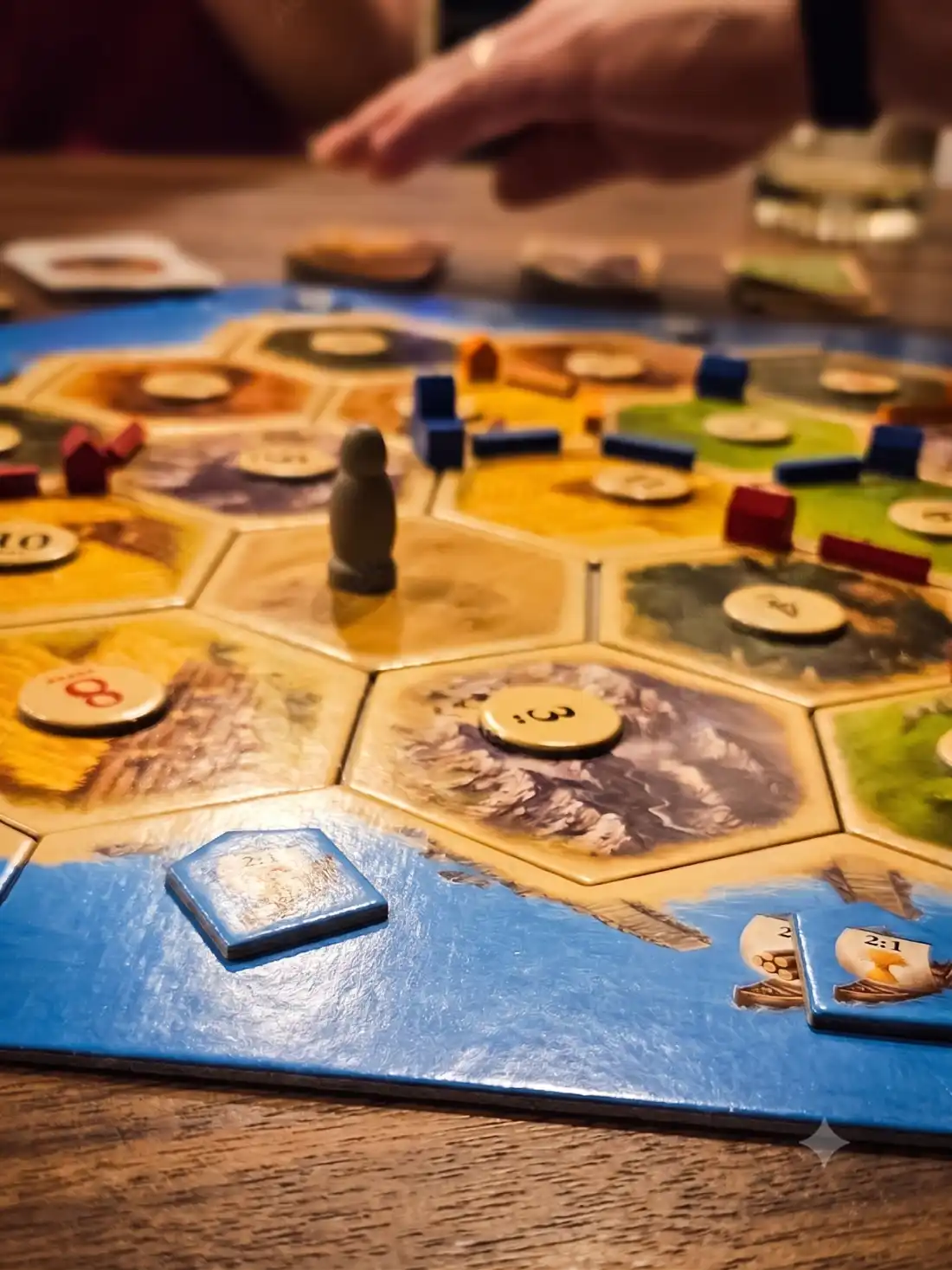
Once these feel comfortable, two games extend directly from what’s above. Catan adds trading and negotiation, the one skill missing from this list, though a bad run of dice can still sink a good player, a tension I get into in my full breakdown of Catan. Wingspan builds on what Splendor taught you, with a longer, more varied engine and almost none of the direct conflict.
For the full step up, including economic games, head-to-head duels, co-ops and six-hour epics, see my guide to the best strategy board games for adults, sorted by the kind of pressure each one puts on you.
Not every table wants that much weight, and that’s fine. Strategy is a spectrum, not a test.
If your group wants a wider mix that includes party and co-op games instead, start with a lighter spread of picks in five board games every beginner should try.
Still don’t know? Take our test and see for yourself which game is right for you:
Which Beginner Strategy Game Should You Start With?
Four quick questions. One real pick.