Loading…
Bears vs Babies
It sounds weird but bear with me...
2.3
(0 reviews)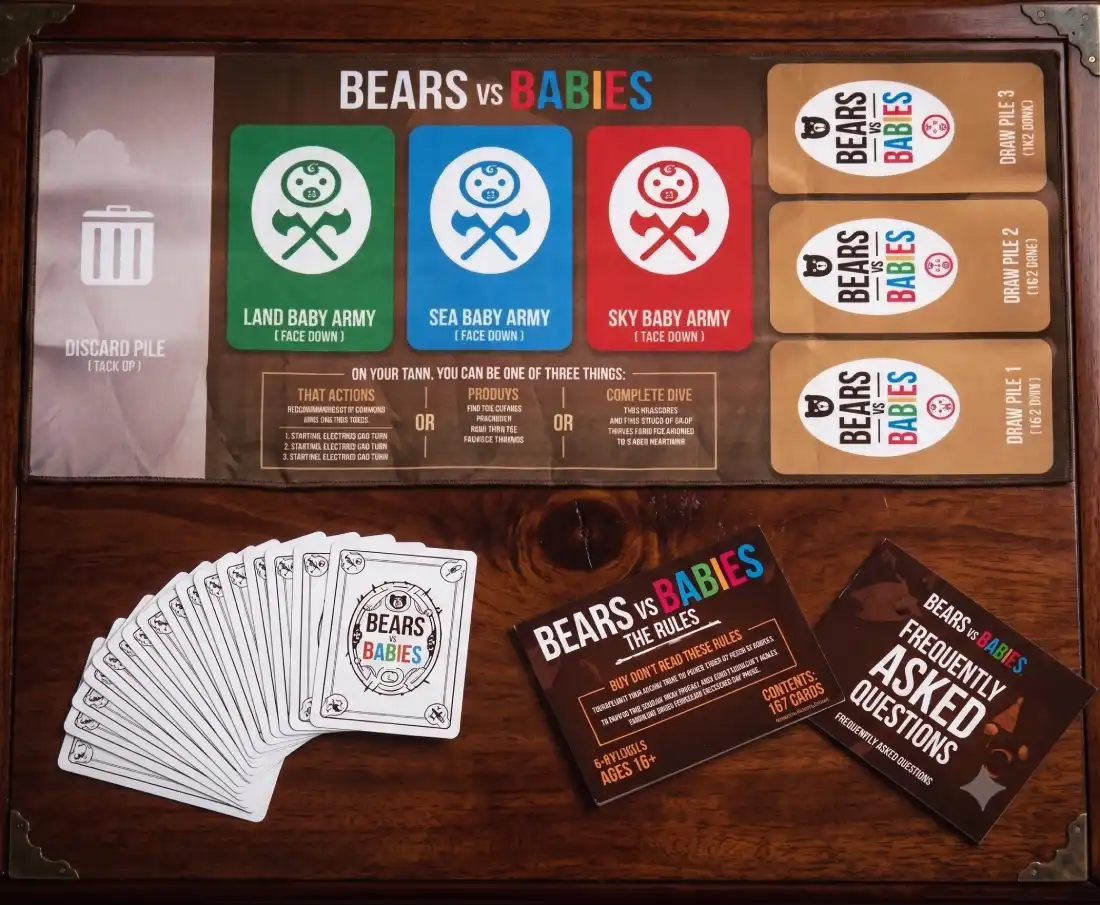
At a glance
- Players
- 2-5
- Play Time
- 20-30 min
- Ages
- 10+
✓ What We Love
- •The box is very original
- •The setup is nice
- •It is easy to explain
- •The art is silly and makes you laugh
✗ Could Be Better
- •You need space to play this game
- •It is not a game you replay a lot
- •Tough to get engaged in this game
About Bears vs Babies
I’ve watched this game blow up a table twice, in both good and bad ways. The good version: someone yells “PROVOKE!”, flips over a stack of Baby cards, and the whole table leans in to see whose mismatched pile of body parts is about to eat the pot.
The bad version: one player builds an unkillable Monster army in the first few turns and everyone else spends the rest of the game watching them win. Both of these are Bears vs Babies. Which one you get depends almost entirely on one rule that a shocking number of groups get wrong on their first play.
Why Bears vs Babies Feels Like a Party Game That Forgot to Finish Its Own Fight
The premise is exactly as dumb as the title promises. You build Monsters, some horrifying combination of a bear’s head, an owl’s wings, and a shark’s tail, and you try to make them strong enough to eat swarms of attacking Babies before someone else does.
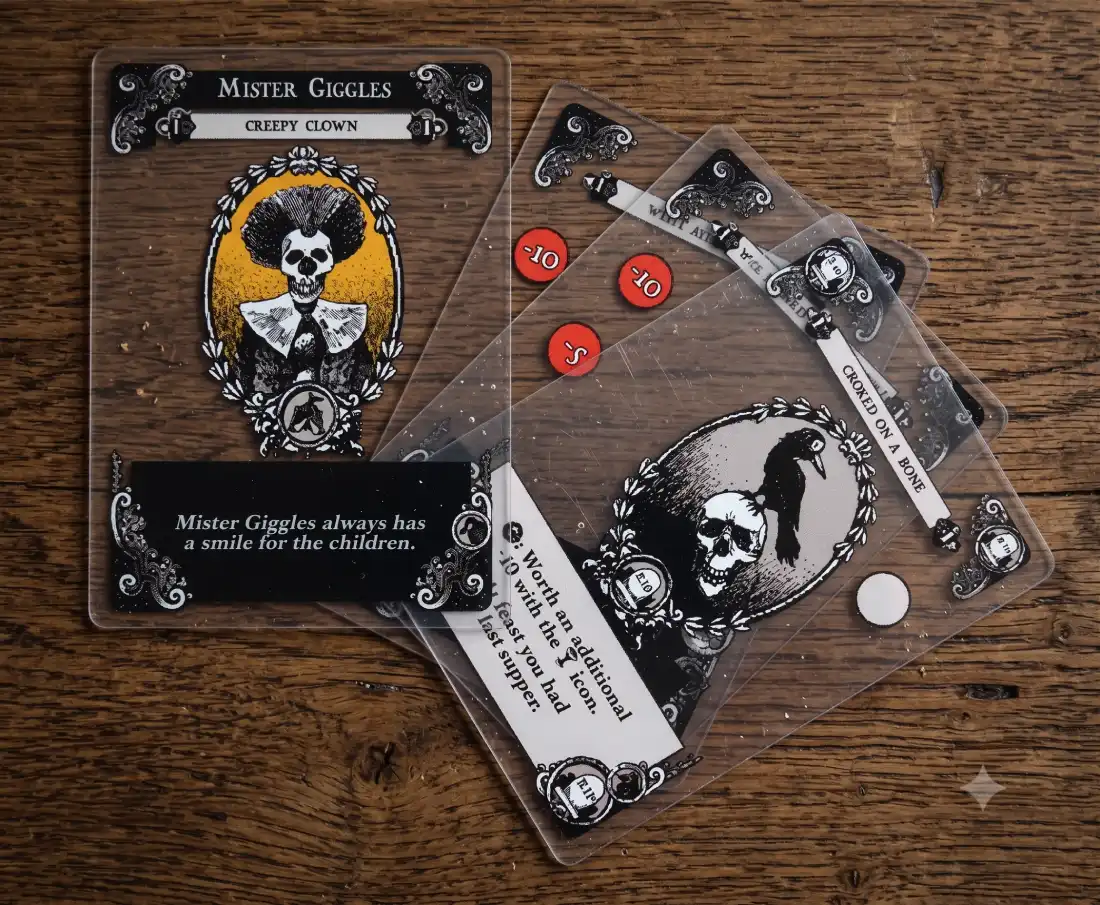
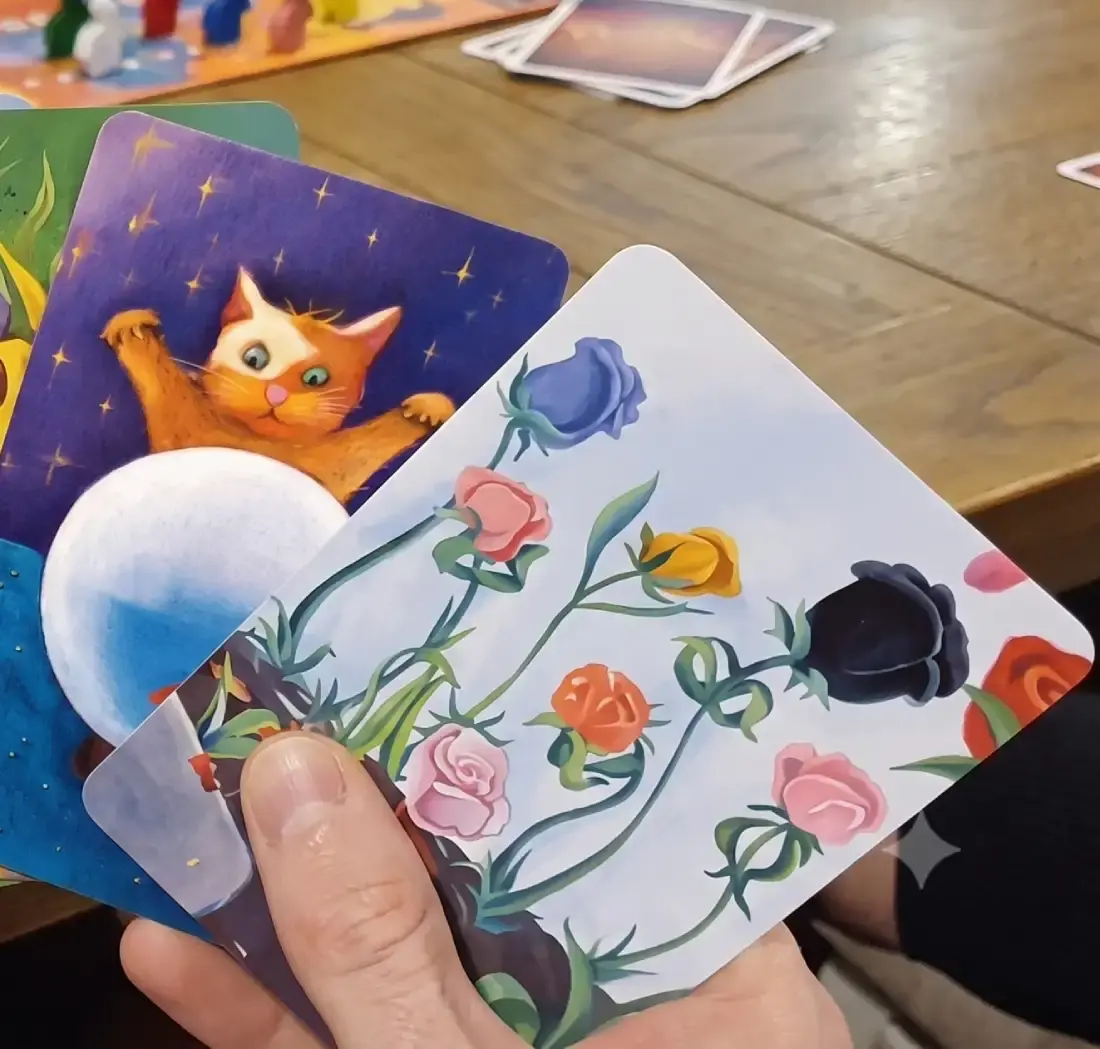
These are not the kind of Monsters you’ll find stalking the board in Horrified, unless Universal’s classic lineup has a secret Bear-Owl-Shark on the roster nobody’s told me about. It’s a Cards Against Humanity crowd’s idea of a strategy game, and mostly it knows that about itself. The card art is doing a lot of the comedic heavy lifting, and it works. Nobody has ever built three Monster armies in this game without cracking a laugh.
Where it stops being a joke and starts being an actual system is the Provoke mechanic, and it’s smarter than the premise lets on. Provoking costs you your entire turn, no other actions, so it’s a real commitment. Flip a Baby Army over and every matching Monster on the table has to fight it, including your own.
Win, and you collect the Babies as points. Lose, and they’re gone to the discard pile, no points for anyone. Either way, every Monster that fought is discarded on the spot, win or lose. That last part is the whole game, and it’s also the part almost everyone misses the first time through.
Is Bears vs Babies Balanced? The Rule Everyone Misplays First
Here’s the complaint I hear most about this game: one player gets a lucky early draw, builds a Monster army nobody can touch, and steamrolls the table for the rest of the match. It’s a real complaint, and it’s almost always caused by the exact same misread rule.
The mistake is playing as though Monsters only get discarded when they lose a fight. Play it that way and the game genuinely is broken, because whoever gets ahead early just keeps their unbeatable army forever and nobody can dislodge them.
The actual rule, straight from the instructions, is that every Monster that fought gets discarded after the battle, regardless of who won. That single clause is the entire balancing mechanism of the game. A strong Monster army isn’t a permanent advantage, it’s a resource you spend the moment you use it, and building one just means you’ve built something worth destroying.
Once you’re playing it correctly, the strategic layer opens up in a way the box doesn’t advertise well. You can provoke a Baby Army specifically to burn out an opponent’s terrifying pile of Monsters before it gets any bigger, even if your own army loses that fight. Sometimes the correct play isn’t building your best Monster, it’s building the smallest, least valuable one on purpose, so that if someone provokes early you lose almost nothing.
There’s a real game of chicken buried in here: everyone building quietly is a race to see who drew the best pieces, but the second someone starts provoking aggressively, it turns into a fight over who can field the least exciting, hardest-to-punish army. That tension, cooperate and race the draw, or provoke and start a war, is more interesting than the premise has any right to promise.
None of this fully erases the luck ceiling, and I won’t pretend it does. Even played correctly, a genuinely bad run of draws, no Baby cards worth chasing, no useful body parts, can leave you spending a whole game as spectator.
This isn’t a deep strategy game and it was never trying to be one. But most of the “this game is broken” complaints I’ve seen evaporate once the discard rule is actually being played right, and that’s worth knowing before you write it off after one bad session.
Is Bears vs Babies Worth It? Who Should Actually Buy It
Buy it for the group that wants a loud, fast, slightly ridiculous party game and doesn’t need it to hold up to serious strategic scrutiny. It plays quick, it’s genuinely funny at the table, and the Provoke mechanic gives it a real decision point that a lot of games in this weight class don’t bother with.
If your table’s baseline is Cards Against Humanity or Exploding Kittens, this slots comfortably into your party games rotation and actually asks a little more of you than either.
Speaking of Exploding Kittens, the comparison comes up constantly and it’s worth addressing directly since they share a publisher and a sense of humor. Exploding Kittens is simpler and more purely random, closer to a party-friendly game of chicken with almost no build-your-own-strategy layer at all.
Bears vs Babies asks more of you. Building Monster armies and timing a Provoke is a real decision tree, even a lightweight one, where Exploding Kittens mostly just asks you to hope. If you found Exploding Kittens too thin, this is a reasonable step up without becoming a different kind of game entirely.
Skip it if you want anything with real strategic depth, or if a single bad draw ruining your night is going to genuinely bother you rather than just be part of the bit. And a practical note on the box before you buy: the furry lid is a fun unboxing moment once and a dust magnet forever after.
Consider a plastic bag or a different storage solution if you’re precious about your components, because more than one owner has learned this the hard way.
One more honest note: there’s an NSFW expansion deck, complete with a novelty item that’s exactly as juvenile as it sounds.
It’s a genuine tonal departure from the core game rather than a light spice-up, so know your table before you bring it out. Fun with the right group, an unwelcome surprise with the wrong one.
📖 Rulebook
How to Play Bears vs Babies
Setup
- Unfold the playmat in the middle of the table. It has color-coded blocks for each Baby type: green for Land, blue for Sea, red for Sky.
- Shuffle the full deck and deal each player a Bear Head card plus four more cards, for a five-card starting hand.
- Any Baby cards dealt into your starting hand go face down on their matching color block on the playmat immediately, then draw back up to five cards.
- Split the rest of the deck into three roughly even, face-down Draw Piles on the table.
- Pick a first player by whatever arbitrary criteria you like. Play moves clockwise from there.
Your Turn
How many actions you get depends entirely on player count, and it's easy to forget: 4 actions with 2 players, 3 actions with 3 players, 2 actions with 4 or more. On your turn, choose one of three things:
- Take actions. Any mix of drawing a card or playing a card, up to your action limit. Playing a card means adding a body part to a Monster, and you must start with a Head card before adding anything else.
- Dumpster Dive. Skip all your actions and take any one card of your choice from the discard pile into your hand.
- Provoke. Skip all your actions and pick one Baby Army to flip over and resolve in battle.
If you ever draw a Baby card, it goes face down onto its matching playmat block instead of into your hand, and that still counts as one of your actions.
Building Monsters
A Monster needs a Head card to start, then you stack body parts on for extra strength, as long as the stitches on each card line up. Every Monster you build is one of three types, Land, Sea, or Sky, shown by the icon on its head. All your Monsters of the same type fight together as a single army, so a lone big Monster and three small ones of the same type combine their strength into one number when it's time to fight.
Bear Heads are the wrinkle worth knowing before you build one. They count as all three types at once, Land, Sea, and Sky, which means a Bear-headed Monster gets pulled into every single battle that happens, whether you want it there or not. That makes them your strongest single piece and also your most exposed one. Treat them carefully.
Provoking and Battle
Provoking costs your entire turn, no other actions allowed. Pick a Baby Army, flip it face up, and total its strength. Every player's Monster army of that matching type has to fight, no opting out, including the army belonging to whoever called the provoke. Ties go to the Monsters. Whoever fields the strongest matching army either eats the Babies as points, or if nobody's strong enough to beat them, the Babies go to the discard pile and nobody scores.
Here's the rule that decides whether your group's playing this game right: every Monster that fought is discarded afterward, win or lose. A battle isn't just a chance to score, it's the end of the road for every Monster involved in it. That single clause is what stops the game from snowballing into an unbeatable early lead, and it's the rule new groups miss most often.
Ending the Game
The game ends once all three Draw Piles run dry. The player who draws the very last card finishes their turn as normal, and then every other player gets one final turn to catch up before scoring. Add up the point values printed on every Baby card you've eaten across the whole game. Most points wins.